
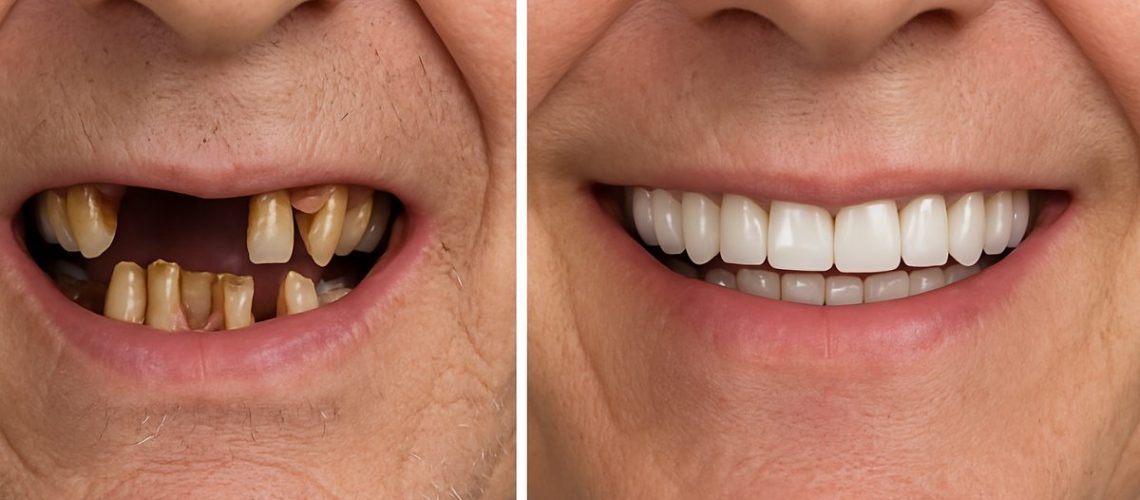
Dental implants top teeth refers to using dental implants to replace missing or failing upper (maxillary) teeth. Restoring top teeth matters for chewing, speech, facial support, and a natural smile. In this guide you will learn what upper‑arch implants are, the common types of restorations for top teeth, who makes a good candidate, the typical treatment steps and timeline, costs and financing basics, benefits and risks, and how a prosthodontist can help. If you’re considering dental implants top teeth, this guide gives clear next steps so you can decide with confidence.
What are dental implants for top teeth?
Dental implants are titanium posts placed into the jaw to replace tooth roots. For the upper jaw, implants anchor crowns, bridges, or prostheses that replace lost top teeth. An implant crown replaces one tooth and looks and functions like a natural tooth. Implant-supported bridges replace several adjacent missing top teeth using fewer implants. Implant-supported dentures or fixed full arches replace a whole top row.
Compared with removable dentures, dental implants top teeth provide more stability, better chewing, and less bone loss over time. Implants integrate with bone (osseointegration), giving a durable foundation for restorations.
Types of dental implants top teeth patients commonly get
Single-tooth implant
Used when one upper tooth is missing. One implant plus a custom crown restores appearance and chewing with minimal impact to neighboring teeth.
Multiple implants and implant-supported bridges
When several adjacent top teeth are missing, two or more implants can support a fixed bridge. This uses fewer implants than replacing each tooth individually and keeps the restoration stable.
Full-arch solutions (All-on-4 and similar)
When most or all top teeth are missing, full-arch options work well. All-on-4 uses four (or more) implants to support a fixed arch. Alternatives include more implants for added support or removable implant overdentures that snap in for daily cleaning. Fixed full-arch restorations feel most like natural teeth; removable options are usually less expensive and easier to clean.
Who is a good candidate for dental implants top teeth
Good candidates generally have reasonable health, healthy gums, and enough upper jaw bone to support implants. Smoking, uncontrolled diabetes, or untreated gum disease raise risk of complications. Upper jaw bone loss or a low sinus floor may require bone grafting or a sinus lift before implants are placed. A dental exam, imaging, and medical history help determine candidacy.
The typical procedure and timeline for dental implants top teeth
Consultation & digital planning
Initial visits include oral exam, digital impressions, and 3-D imaging to map bone and sinuses. A clear plan shows implant numbers, positions, and the proposed prosthetic. Digital planning improves accuracy and patient predictability.
Surgery, healing, and restoration
Implant placement is usually outpatient. After surgery the implant needs time to fuse with bone (often 3–6 months). Temporary teeth may be provided during healing. Once healed, the final crown, bridge, or full-arch prosthesis is attached and adjusted for fit and function.
Costs, insurance, and financing options
Costs vary by treatment type: single implants cost less than full-arch solutions. Major cost drivers are number of implants, need for grafts or sinus lifts, and the design of the final prosthesis. Some dental insurance covers parts of the prosthetic work but often not the implant hardware. Many practices offer financing plans, third-party medical credit, or in‑office payment options to spread costs.
Benefits and risks to know before getting dental implants top teeth
- Benefits: improved chewing and speech, preserved jaw bone, long-lasting natural look, and better comfort than removable dentures.
- Risks: infection, implant failure, need for bone grafting, or sinus complications. Risks drop with careful planning, good oral hygiene, and quitting smoking.
Why choose a prosthodontist for upper-teeth implants
Prosthodontists specialize in complex restorations and full-mouth rehabilitation. They focus on function, bite, and esthetics to deliver predictable, natural results. At the Jacksonville Center for Prosthodontics and Implant Dentistry, Dr. Noel Rodriguez and the team use on-site digital planning, a Carestream CS 3600 intraoral scanner, and Carestream CBCT systems to improve accuracy for dental implants top teeth in Jacksonville, FL. Their experience with full-arch cases and advanced imaging helps reduce surprises and speeds treatment planning.
Next steps: scheduling a consultation
If you’re ready to learn whether dental implants top teeth in Jacksonville, FL are right for you, request a consultation to review imaging, costs, and financing options. A personalized plan will show treatment steps, expected timeline, and what to expect at each visit. Ask about temporary options during healing and how they’ll protect your comfort and smile during the process.
