
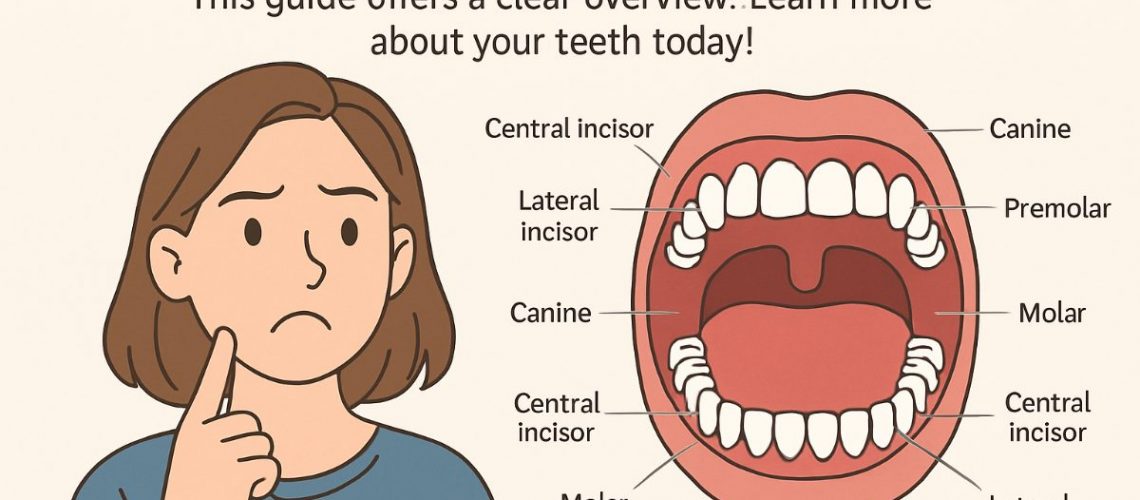
Teeth placement in mouth affects how you chew, speak, and look. This article answers whether there is a best placement and what matters for function, appearance, and long-term health.
Common tooth placement patterns and why they exist
Incisors (front teeth)
Incisors sit at the front and shape your smile line. Their ideal position is slightly forward and even across the midline to cut food, help speech, and show a balanced smile.
Common issues include crowding, spacing, and rotation, which can change bite and make cleaning harder.
Canines and premolars
Canines guide side-to-side jaw movement and help keep the bite stable. Premolars act as a bridge between canines and molars.
When canines or premolars are out of place, the jaw may shift, increasing wear and making chewing less efficient.
Molars
Molars provide the main chewing surface and support the back of the bite. Proper molar placement keeps the upper and lower jaws aligned when you close.
If molars are missing or tipped, the bite can collapse, leading to uneven force and more tooth wear or pain.
What “best” means for teeth placement in mouth
Function
Best placement for function means a stable bite with even force distribution. That keeps chewing efficient and reduces strain on teeth and jaw joints.
Aesthetics
For looks, ideal placement creates symmetry, a pleasing smile arc, and proper tooth proportion. Small changes in position can dramatically affect appearance.
Long-term health
Long-term best placement minimizes abnormal wear, supports gum health, and lowers the risk of TMJ (jaw joint) problems. Healthy placement is about durability over decades, not just how teeth look now.
Factors that change ideal placement
Individual anatomy
Jaw size, tooth size, and facial proportions all shape what is ideal for you. Genetics set many limits on how teeth can be positioned.
Life events and conditions
Missing teeth, orthodontic history, grinding (bruxism), and injuries change placement needs. These events can move teeth or wear them down over time.
Treatment constraints
Restorations, crowns, bridges, and implants affect how teeth can be arranged. Prosthetics require planning so replacement teeth fit the bite and look natural.
How a dental professional decides and what to expect next
A dentist will do a clinical exam, take X-rays or a CBCT scan if needed, analyze your bite, and often make models or digital scans. These steps show how current placement affects function and health.
Typical treatment paths include:
- Orthodontics to move teeth into better positions.
- Crowns or veneers to adjust shape and contact points.
- Implants or bridges to replace missing teeth and restore support.
- Occlusal adjustments or night guards for wear or grinding.
If you wonder about your own teeth placement in mouth, schedule an evaluation. A personalized plan will explain options, likely outcomes, and what to expect during treatment.
