
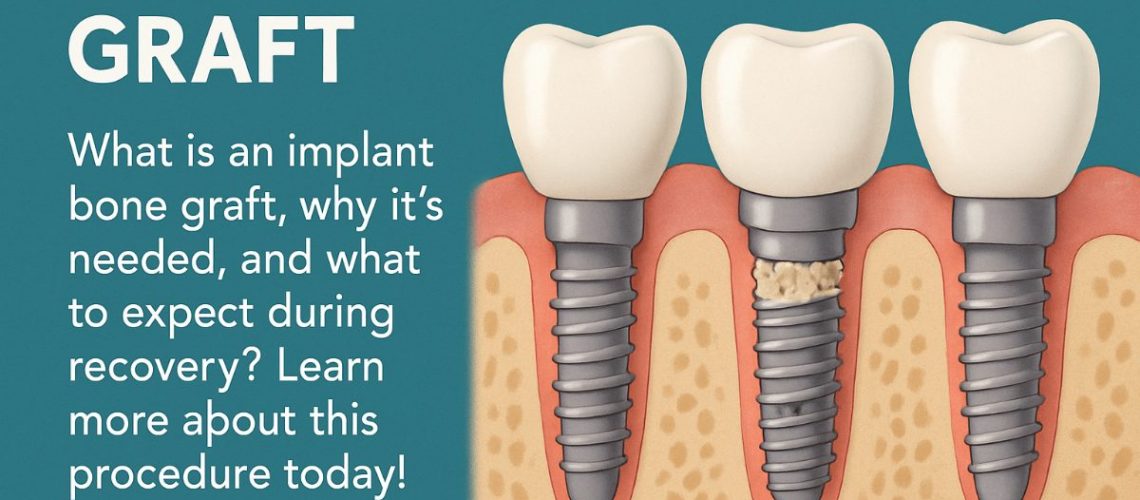
An implant bone graft helps rebuild missing jawbone so a dental implant can be placed safely and look natural. If you’ve lost teeth, had gum disease, trauma, or been told you don’t have enough bone for an implant, this post will help you understand what an implant bone graft is, why you might need one, how clinicians decide, and what to expect before and after the procedure.
What is an implant bone graft?
An implant bone graft is a surgical procedure that adds bone or bone-like material to the jaw where bone volume is low. The added material gives dental implants a stable base to integrate with your jaw. Grafts can be small (to support one implant) or larger (to rebuild an entire ridge), depending on the amount of bone missing.
Why you might need an implant bone graft
Bone loss after tooth loss
When a tooth is lost, the jawbone that once supported it begins to shrink. Over months to years, this can leave too little bone to hold an implant. In these cases, an implant bone graft in Jacksonville, FL, or near your area may be needed to restore enough height and width.
Periodontal disease and infection
Advanced gum disease can destroy the bone around teeth. If infection has reduced bone height or density, an implant bone graft in Jacksonville, Florida, can rebuild the area so an implant will be secure.
Trauma, congenital, or developmental issues
Injuries, missing teeth from birth, or developmental problems can leave the bone thin or absent. An implant bone graft in Jacksonville, FL, can correct these deficits before implant placement.
Types of implant bone grafts
Autograft (your own bone)
Autografts use bone taken from another site in your body (often the chin or hip). Pros: best chance of integration and healing. Cons: extra surgery, more recovery time.
Allograft, xenograft, and synthetic grafts
Allografts come from human donors, xenografts from animals, and synthetic grafts are lab-made. These avoid a second surgical site and are commonly used to rebuild bone with good success rates.
Ridge augmentation and sinus lift
Ridge augmentation rebuilds the jawline where teeth are missing. A sinus lift raises the sinus floor in the upper jaw to create room for implants. Both are common types of bone-grafting procedures.
How clinicians decide if you need an implant bone graft
Clinical exam and digital imaging
A clinical exam, 3-D imaging (CBCT), and intraoral scans precisely measure bone height and width. These tools help surgeons determine whether an implant bone graft is needed and which type will work best.
Timing: immediate grafting vs staged approach
Sometimes grafting happens at the same time as implant placement (immediate). Other times it’s staged: graft first, heal for months, then place the implant. Your clinician will recommend the best timing for long-term success.
What to expect during recovery and potential risks
Typical healing timeline
Healing usually takes several weeks to months. Small grafts can integrate in 3–4 months; larger reconstructions may need 6 months or more before implant placement.
Common risks and how they’re managed
Risks include infection, graft failure, or swelling. Dentists manage these with antibiotics, careful surgical technique, and follow-up visits. Report fever, increasing pain, or unusual drainage right away.
How to improve your chances of graft success
Medical and lifestyle factors
Quit smoking, control diabetes, and review medications with your clinician. These steps improve healing and reduce the risk of graft failure.
Oral hygiene and follow-up care
Good home care and regular check-ups help protect the graft while it heals. Follow your provider’s instructions for cleaning and activity restrictions.
When to consult a prosthodontist about an implant bone graft
Complex cases benefit from a prosthodontist’s planning and digital tools, such as on-site CBCT. Experienced teams use on-site imaging and digital planning to match grafting and implant placement to your final restoration. The Jacksonville Center for Prosthodontics and Implant Dentistry, led by prosthodontist Dr. Noel Rodriguez, uses on-site imaging and digital planning to evaluate implant bone-graft needs and achieve predictable results.
Next steps: getting evaluated for an implant bone graft
Bring a list of medications, medical history, and any previous dental X-rays. Ask about imaging options, graft types, timeline, costs, and financing. To call or request a consultation with a prosthodontist experienced in implant bone grafting.
