
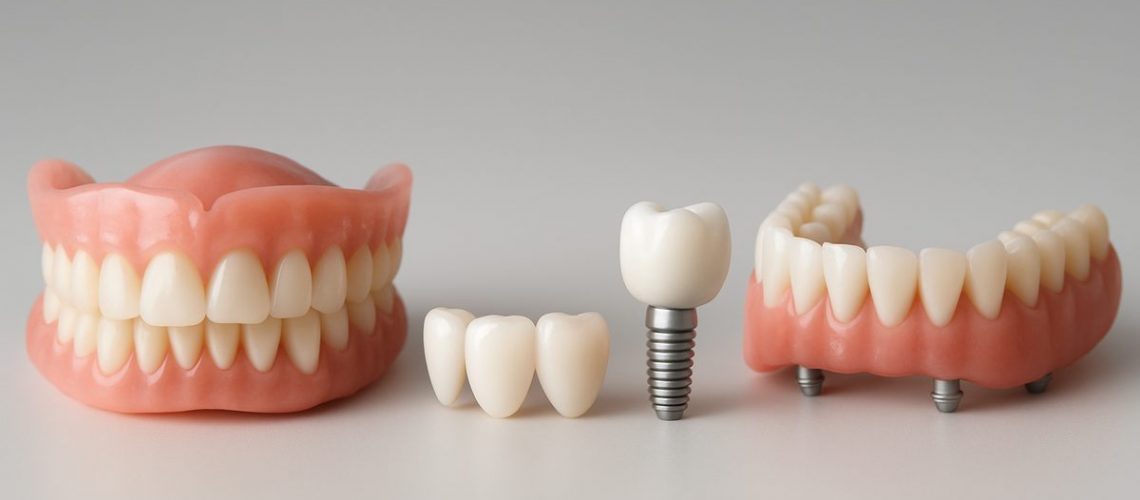
If you’ve ever wondered what replacement teeth are called, the short answer is prosthetic teeth or restorations. These replace missing or damaged teeth and come in several forms: dentures and partials, crowns and bridges, traditional dental implants, All‑on‑4, and implant‑supported dentures. Each option has different pros, cons, costs, and timelines. This guide defines the common names, explains how they work, and shows what to expect so you can talk with your dentist or prosthodontist with more confidence.
What Are Replacement Teeth Called?
Replacement teeth are often called prostheses, restorations, or prosthetic teeth. Patients may hear “false teeth,” “dentures,” “implants,” or “crowns.” Clinically, a crown covers a damaged tooth, a bridge replaces one or more teeth by anchoring to neighbors, and dentures are removable plates. The term “dental implant” usually refers to a titanium post placed in bone, plus the crown or denture that attaches to it. If you search what replacement teeth are called in Jacksonville, FL, you’ll find these same terms used by local specialists.
Common Types of Replacement Teeth
Dentures and Partials
Dentures are removable plates that replace some or all teeth. Partials fill gaps when some natural teeth remain. They’re usually the fastest and least expensive option. Pros: lower cost and quick results. Cons: can shift, need adhesives, may feel bulky, and require regular relines or replacements.
Bridges and Crowns
A crown restores a single damaged tooth. A bridge uses crowns on adjacent teeth to hold one or more false teeth in the gap. Bridges feel more stable than dentures and don’t require surgery. Downsides: nearby healthy teeth must be altered, and bridges may need to be replaced after several years.
Traditional Dental Implants
A traditional implant is a titanium post placed into the jawbone that fuses with bone (osseointegration). After healing, a crown is attached. Implants are long‑lasting, stable, and feel natural. They require enough bone and a surgical procedure. Maintenance is similar to natural teeth.
Implant‑Supported Dentures & All‑on‑4
Implant‑supported dentures attach to multiple implants for better stability and chewing. All‑on‑4 replaces a full arch with four or more implants holding a fixed bridge. These options suit patients who need full‑arch replacement and want a secure, permanent feel compared with removable dentures.
Removable vs Fixed: Which Is Right?
Removable (dentures/partials) are cheaper and noninvasive but less stable. Fixed (bridges, implant crowns, All‑on‑4) offer better function, comfort, and longevity but cost more and often need surgery. Consider daily comfort, how you eat and speak, maintenance needs, and budget when choosing.
How To Choose Replacement Teeth
Key factors: your oral and bone health, medical history, budget, cosmetic goals, and how long you can wait for treatment. Your dentist or prosthodontist will assess bone volume and overall health, then recommend options that balance function, look, and cost.
Care, Longevity, and What To Expect After Placement
Care varies: dentures need nightly soaking and periodic relines; bridges and crowns require regular brushing and flossing and may last 5–15 years; implants often last decades with good care. Expect follow‑up visits, occasional adjustments, and routine dental cleanings.
Costs, Insurance, and Financing
Costs range widely: dentures are typically the least expensive; bridges are midrange; implants and All‑on‑4 cost more due to surgery and lab work. Insurance may cover part of crowns or bridges, but often limits coverage for implants. Many practices offer payment plans or third‑party financing to spread costs.
Why Work With a Prosthodontist for Replacement Teeth
Prosthodontists specialize in replacing and restoring teeth. They plan restorations to achieve optimal function and appearance, especially in complex cases. Their training helps ensure precise fit, better chewing, and more natural results.
About Jacksonville Center for Prosthodontics and Implant Dentistry
Jacksonville Center for Prosthodontics and Implant Dentistry provides prosthodontic and implant care under the leadership of Dr. Noel Rodriguez. The team uses digital planning, intraoral scanning, and on‑site 3‑D imaging to improve predictability and comfort. Consultations and financing options are available to help patients plan treatment.
Next Steps: How To Get Started
To decide which replacement teeth suit you, schedule an evaluation. The team will review your mouth, take any needed images, explain options, and outline costs and timing. Ask specifically what replacement teeth are called for your situation, so you leave with a clear plan.
